sábado, 19 de noviembre de 2011

Valldemossa

Hypericum balearicum is a species endemic to the Balearic Islands and is in the Guttiferae. I saw it all over the place on this hike but this one was the only one I saw flowering because they typically flower between March and July.  

The flower of Hypericum balearicum.
This is madroño (Arbutus unedo) and I saw two large, almost tree-like, specimens on this hike around Valldemossa. 

The fruit of the madroño. It was quite sweet but a little granular like a pear. 

Juniper (Juniperus oxycedrus) was quite common and very bushy. This one was the only male plant that I saw. 

Moss = musgo in Spanish. 

What a cute little Cladonia lichen!

Check out the apothecia on this bad boy!

Puffball or primordia?

Ephedra fragilis

Ephedra in its natural habitat. 

Tiny!
Tinier!


This was more than just mold, it was definitely some kind of dense fungus in a non-mushroom form, probably an Ascomycete.  It was growing on fallen leaves, dirt and rocks. 

Some very slimy Basidios.  

Russula?

Check out those lamellae!


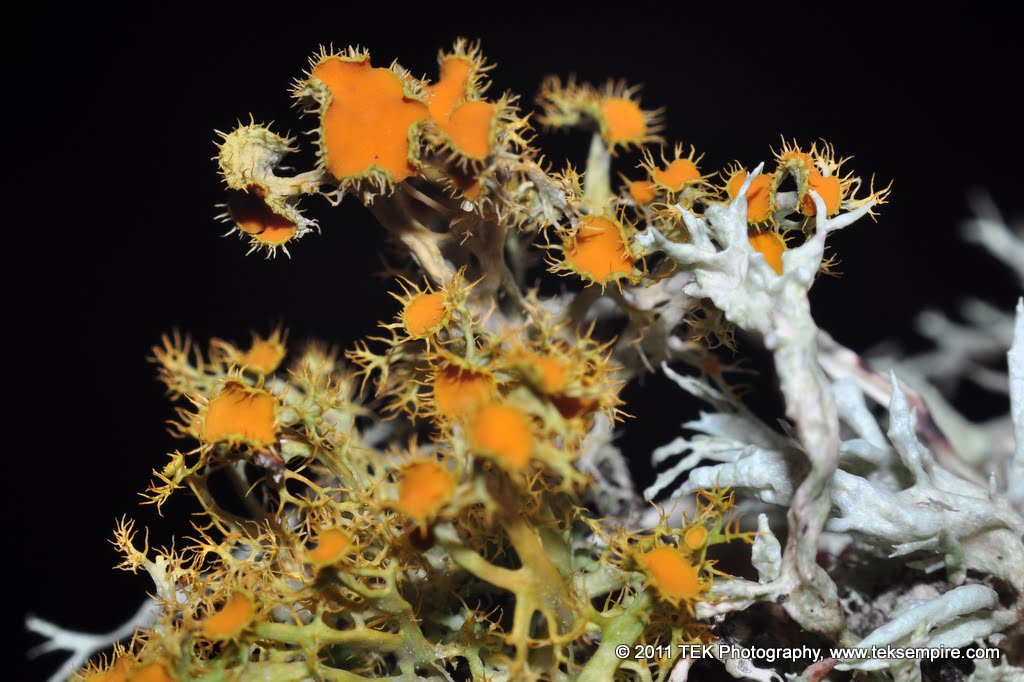
This fruticose lichen has very spiky apothecia. 

Now is the time for mushrooms with all the rainfall we have been getting. 

Some decomposing mushrooms. 

Mushrooms pre-decomposition. 

Some puffball mushrooms. 

The water droplets on the spore mass inside the puffball look so cool!

Checking out an aeroid species with beautiful leaves.  


These white mushrooms were all over the place. 

Can't wait to see what flowers these beautiful leaves come up with. 

A tiny little wood-rotter. 

The dried up inflorescence of fennel (Foeniculum vulgare).

lunes, 14 de noviembre de 2011

La Trapa


We went on a hike in La Trapa in the northern part part of Mallorca near the tiny town of Sant Elm in the Tramuntana mountain range. 

Merendera filifolia
I had never seen anything like these specimens of the Lilliaceae that grow directly out of the ground! When I saw one for the first time I thought someone had picked the flower and stuck it in the ground. And then I saw them everywhere!


Viola arborescens is a very distinctive violet because the leaves are not heart-shaped.
Arisarum vulgare was abundant all along the trail at all elevations. The common name for A. vulgare here in Mallorca is frailillo. This name means "little friar" because the leaf surrounding the inflorescence looks like the hood of a friar and the inflorescence itself looks like the friar's big nose.

This really is a gorgeous specimen of the Araceae. And to think, in November! The flowering time is apparently December to March and they are very common here.
A pretty wide variety of colors on these guys. Unfortunately my camera wouldn't focus.

Me botanizing.
See the little purple heads of the Arisarum vulgare flowers poking up above the bright green foliage?
Leafy liverwort or some kind of Lycophyta?
Wild rosemary (Rosmarinus officinalis) or Romero, as it is called in Spanish is also very abundant on the island.
Some kind of poroid Basidiomycete that was absolutely everywhere in the lower elevation parts of the hike. 

You can somewhat see the poroid hymenophore in this picture.
I wish I had gotten a chance to look at these mushrooms more closely but they were not that common and the group we were with was keeping up quite a fast pace.
What stunning color. I wish I had an amazing website at my fingertips for fungus like I do for flowers with the Virtual Herbarium.
Crocus cambessedesii is called Safrá and is an endemic species of Mallorca and Menorca. It flowers from September to December in rocky areas. The leaves pop out after the plant is done flowering.
The heart shaped leaves in this picture are from the frailillo. 

The climate here is pretty arid, with lots of Pino Carrasco (Pinus halepensis) everywhere.
Heather (Erica multiflora) was also very abundant and very much in flower. 

I will definitely be returning to La Trapa more towards the springtime to check out what plants are starting to flower!

Some Pretty Pictures

My husband is a photographer and took these pictures:


I just figured out that this tropical cultivar is called Boussingaultia cordifolia.  


I am pretty sure that this is Alyssum spinosum but I am going by pictures and descriptions in the website that is created and maintained by the University of the Balearic Islands. This species looks like cultivar Alyssum.


A beautiful Asteraceae species that I was too lazy to try and key out/search for in the hundreds of specimens they have documented in the herbarium website.


¡Que bonita!

viernes, 4 de noviembre de 2011

Algarrobo

I went to the Jardín Botánico de Sóller yesterday and was able to snap a couple pictures even though I was there on a field trip with my school.

Here are a few pictures of a common native tree around here called Algarrobo (Ceratonia siliqua) that is in the Fabaceae.


These long pods that can be up to 20 cm in length smell like strong, stinky(or delicious depending on who you are)cheese. These trees are common here interspersed between almond trees because farm animals like pigs, goats and sheep eat the pods.


These dried fruits belong to a species that is closely related to our beloved Madrone (Arbutus menziesii)in Humboldt, Trinity, and Mendocino counties. It is called Madroño here in Mallorca. This particular species is found on the Canary Islands, hence the name Arbutus canariensis.

I hope to return to this botanical garden sometime soon in the future to check out some more native species!


viernes, 28 de octubre de 2011

La Universidad de Las Islas Baleares

Yesterday I met with Professor Maurici Mus, a botanist at the University of the Balearic Islands. He was very helpful to me by showing me various books that I could purchase to help with my lichens project and to identify plant species on Mallorca and providing me with contact info for other botanists in the area. He also offered up the use of the microscopes and other resources in the botany lab whenever I needed them.

It was really great going there because the botany department here reminded me so much of the botany department back home at Humboldt. It was crowded with full pictures of plants, potted plants, and microscopes. I don't know what I was expecting, but it made me feel happy to see how similar things can be even if they are across the world.

Check out the Virtual Herbarium!

miércoles, 26 de octubre de 2011

East Side of the Island

Here are a few botanical pictures from the east side of Mallorca, where I went this last weekend. I am meeting with a botany professor tomorrow so hopefully I will get some books on the flora of the island so I can give more details about what these pictures are of.


There were tons of these tiny little palms everywhere! They are called palmitos (Chamaerops humilis) and they are native to Mallorca.


Smilax aspera ssp. balearica


Lots of beautiful Araceae leaves popping up everywhere..


Some wild rosemary...


Fruticose lichens!


There are large patches of this orange lichen all over the place at the beach called Cala Varquez.


This hillside will be gorgeous in the spring with all those flower stalks covered in some kind of Lilliaceous flowers


I promise the next post will be way more descriptive!

domingo, 16 de octubre de 2011

Mallorca

I have been living in Palma de Mallorca for the last 2 and a half weeks and I will continue to be living here until the end of May. Mallorca is located in the middle of the Mediterranean Sea and thus has a Mediterranean climate.

I am living in a city of 400,000 people so the majority of the plants I have seen are cultivars planted around the city like palms, many tropical species, olive trees, and various shrubs.

I was able to go hiking about a half hour north-east of the city near a town called Valldemosa in a very rocky, semi-arid landscape. The landscape was mainly dominated by a species of 2 needle Pinus and a couple differentQuercus species. There was an abundance of lichens and mosses, and I also spotted a few ferns. Unfortunately October is not really the best time to look for flowers but there were some representatives from the Asteraceae and Scrophulariaceae (if it still existed).

Here are a few pictures of what I have been talking about:


The view of the sea from a point on my Valldemosa hike


A very cute moss I saw saw frequently with very long, silvery awns


These orange crustose-foliose epilithic lichens are everywhere in the city of Palma. Maybe a nitrogen loving species like Xanthoria?


And here is a fine specimen of Olea europaea, or olive, that was growing in Palma.

I saw plenty of cubical brown rot on my hike but no mushroom fruiting bodies to check out. Once it starts raining, hopefully that will change.

I also hope to go visit a few botany professors at the University of the Balearic Islands to borrow some books so I can start keying species out!